
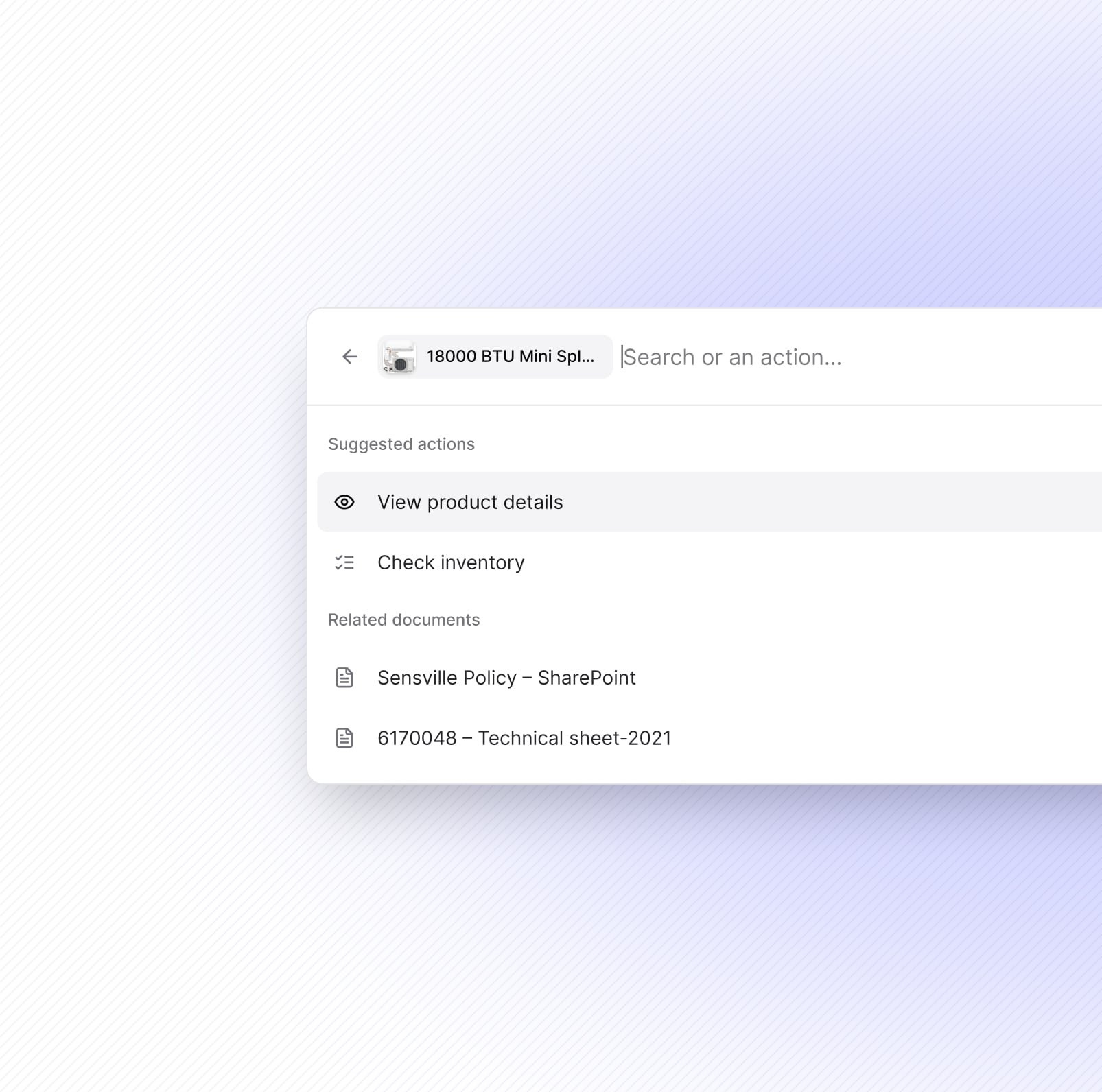
Canac runs its stores on SAP—without touching SAP.

Large retail organizations rely on ERP systems like SAP to manage inventory, pricing, orders, logistics, and financial control.
Canac is no exception.
Five years ago, Canac undertook a major transformation: moving from a legacy system to SAP to standardize its operations across stores, plants, and distribution. The objective was clear: stability, scalability, and long-term control. The SAP deployment was intentionally kept as close to standard as possible.
That decision paid off.
But as day-to-day retail operations evolved, a new reality emerged:
while the system worked, execution on the floor became harder.
Rather than re-customizing SAP or fragmenting its architecture, Canac chose a different path, introducing an operational layer on top of SAP to better align systems with how work actually happens in stores.
That decision led to the integration of Frontleap.
The operational challenge after SAP standardization
SAP brought structure, rigor, and control to Canac’s core processes. Inventory, orders, and pricing were centralized and reliable.
However, in a fast-moving retail environment, Canac identified growing friction for frontline teams and operations leaders:
- inventory and product availability spread across multiple systems
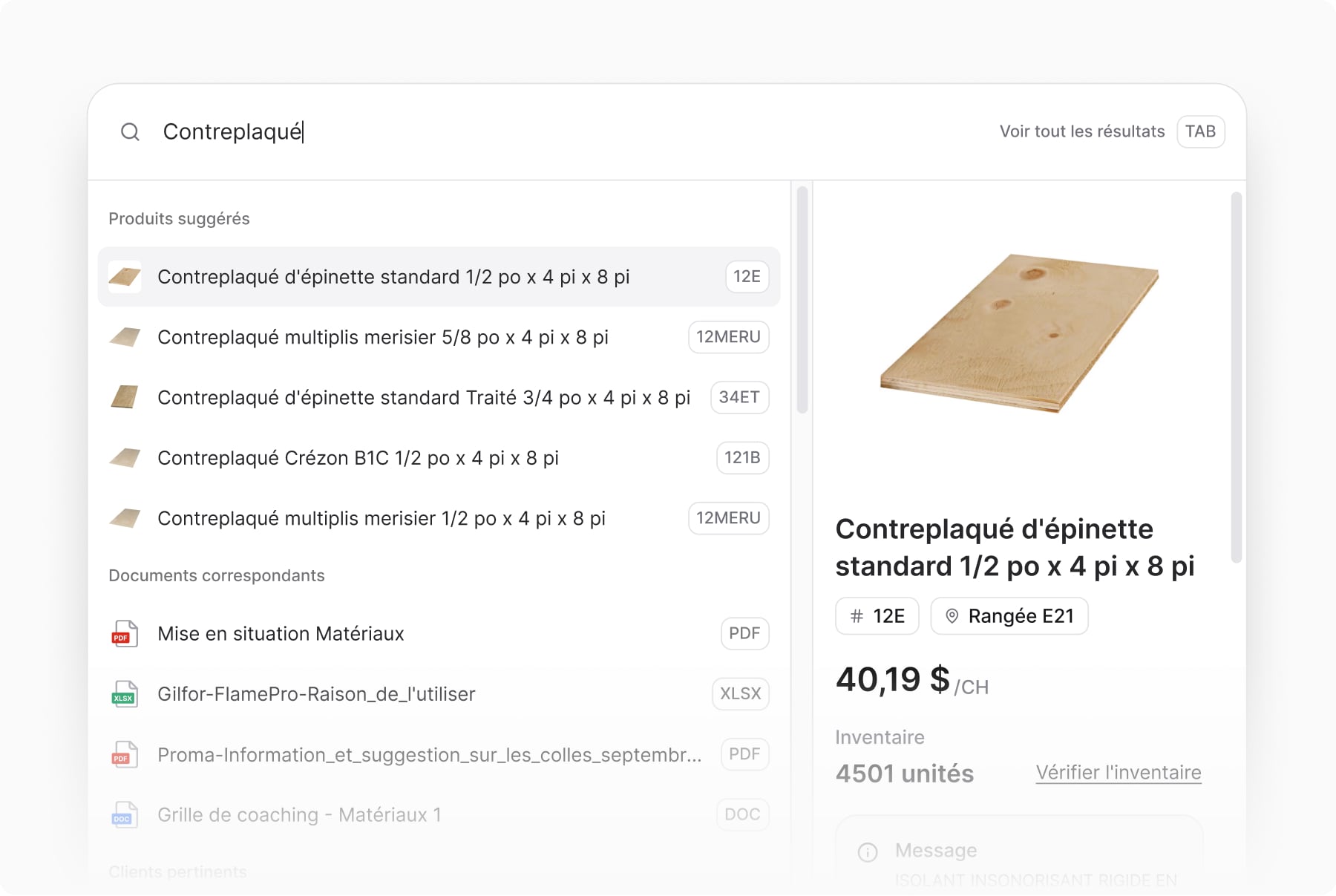
- slow, fragmented search across items, locations, and stock types
- complex steps to create quotes and convert them into orders
- operational steps disconnected between stores, plants, and logistics
- increasing cognitive load during peak periods
Each year, more than 1,500 employees are trained on Canac’s operational processes. Even with solid training, the gap between system logic and store reality remained.
The issue was not SAP.
It was the absence of a unified operational layer across SAP S/4HANA, SAP Sales Cloud, and SharePoint, built around day-to-day execution.
Starting with the most critical retail use case: inventory & availability
Canac and Frontleap intentionally began with the highest-impact operational domain:
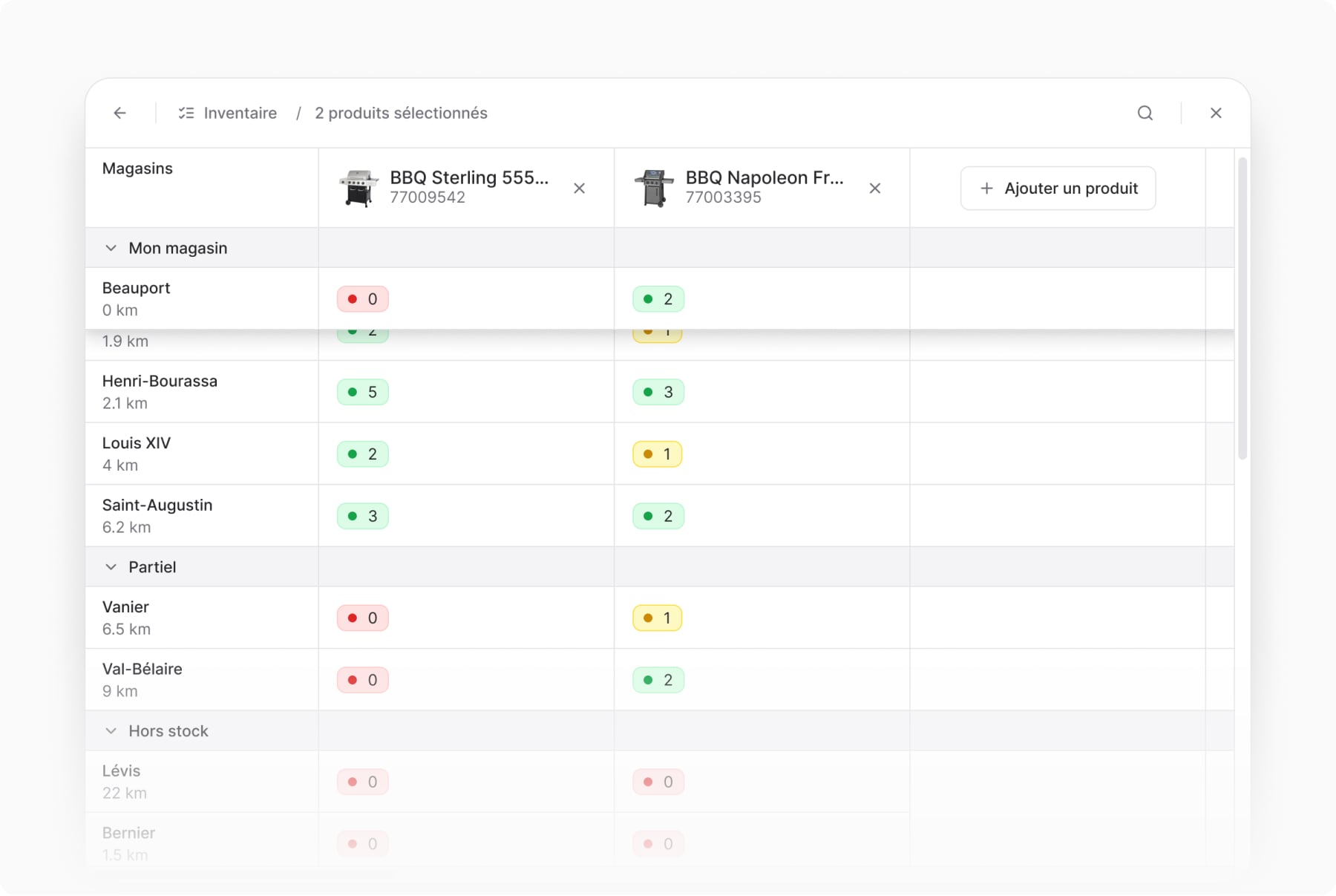
inventory and product availability across all stores and plants.
For retail operations, availability is everything.
If teams cannot answer “Do we have it, where, and when?” quickly, execution breaks down.
What Frontleap enabled
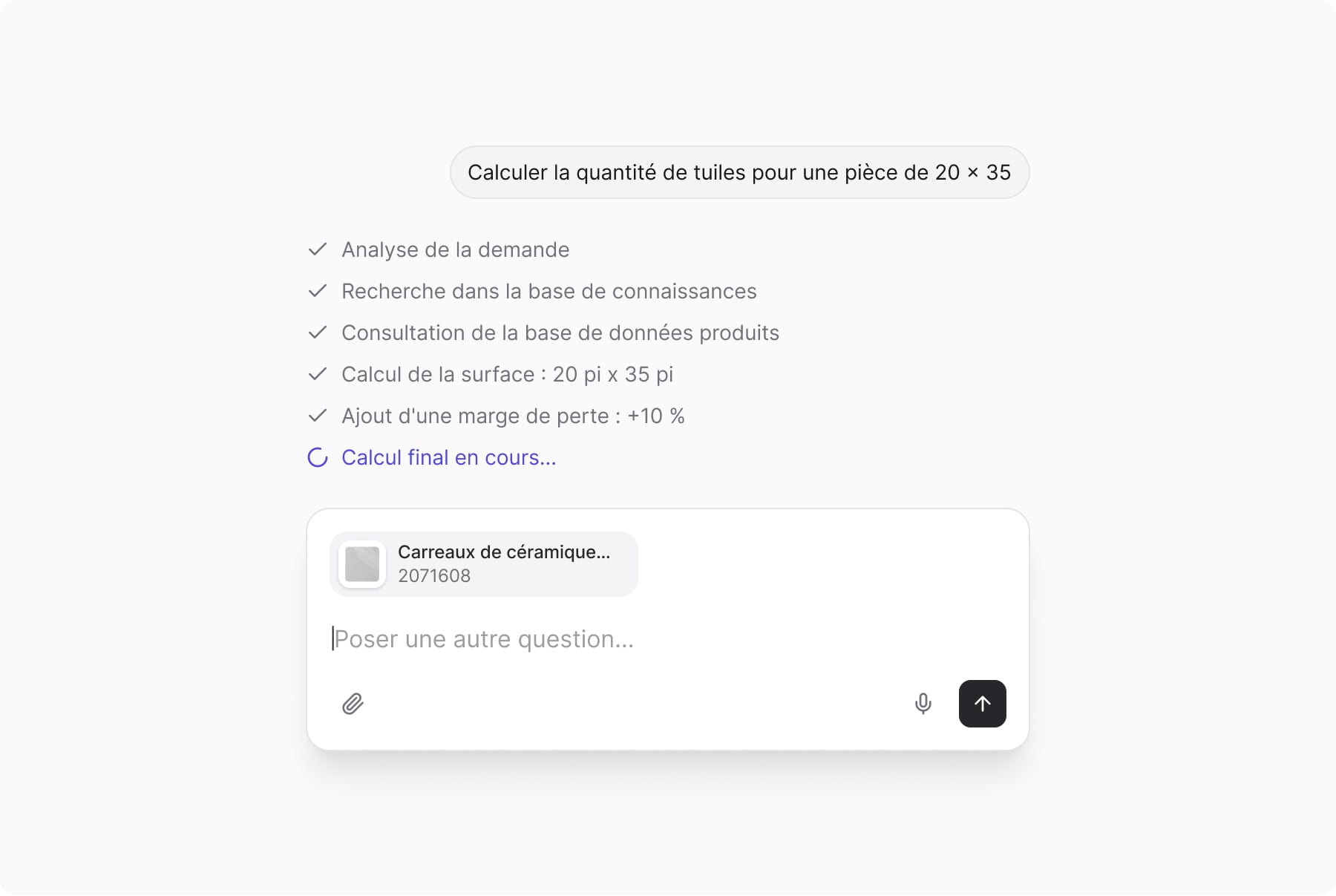
Instead of navigating multiple SAP transactions and data tables, Frontleap introduced a snappy, task-oriented operational interface that allows teams to:
- search inventory across stores, plants, and warehouses
- query multiple data entities (products, variants, locations, quantities) in one action
- access availability in real time without switching systems
- move from availability to quote or order creation seamlessly
This single improvement removed dozens of micro-frictions repeated hundreds of times per day.
Extending the operational layer across core retail workflows
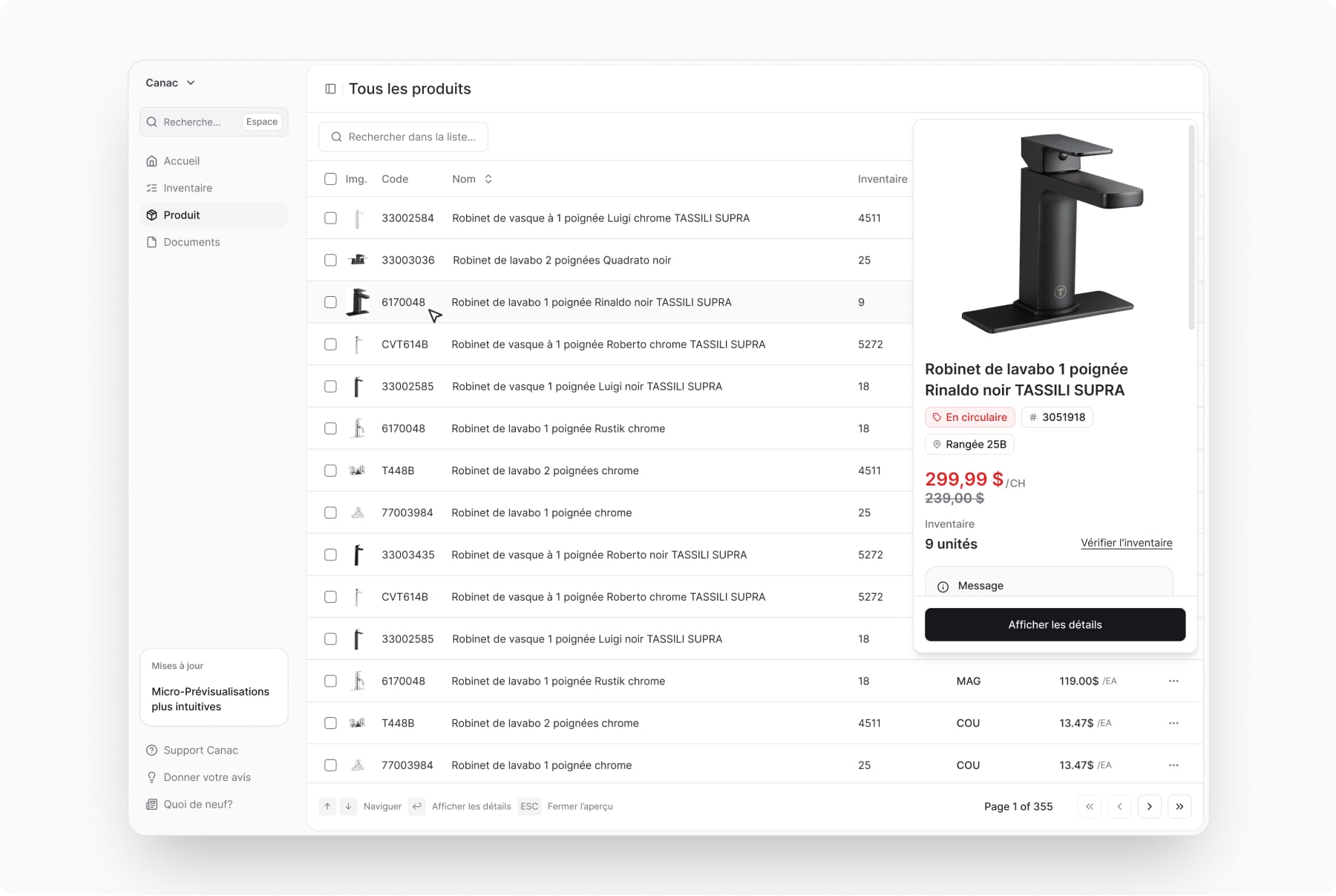
Following the deployment of inventory and product availability, Canac has committed to progressively extending the value delivered by Frontleap across other high-impact retail workflows.
One of the next focus areas is quotes and order creation. By building on the availability foundation already in place, Frontleap is expected to help streamline how quotes are generated, ensure tighter alignment between quoting and ordering, and reduce friction between sales teams, store operations, and back-office processes. The objective is not to change underlying systems, but to make the path from customer request to confirmed order clearer and more reliable.
Future phases will aim to simplify execution for warehouse and logistics teams, promote greater consistency across locations, and improve synchronization between operational actions and SAP records. As with earlier phases, the emphasis remains on standardizing how work is executed without introducing ERP customization.
Across all current and future extensions, the guiding principle remains the same: simplify execution at the workflow level while preserving the integrity of the ERP.
Understanding real work before designing workflows
A defining element of the project was Canac’s openness to direct operational observation. Rather than relying solely on documentation or system metrics, the organization chose to expose real store operations to close, hands-on analysis.
As part of the collaboration, Frontleap’s co-founder David Dupont spent one day per week on site, working alongside store and operations teams in real conditions. This immersion surfaced realities that dashboards rarely capture. Employees routinely develop workarounds to compensate for system complexity, small frictions repeat hundreds of times per day and quietly erode productivity, and the same task is often executed differently depending on context. In practice, ERP steps do not always align with operational intent.
These observations reinforced Canac’s strategic conclusion: the objective was not to re-engineer SAP, but to re-engineer execution.
Frontleap as an operational layer on top of SAP
Frontleap was deployed as a business process operational layer positioned between SAP and frontline teams. Rather than replacing existing systems, it orchestrates workflows across them, translating complex system logic into clear, task-oriented execution for daily operations.
By presenting information based on what teams need to do rather than how data is structured in the ERP, Frontleap reduces navigation and cognitive load. Operational actions are synchronized with SAP in the background, allowing teams to work without waiting on system responses while preserving data integrity. This approach keeps the overall architecture clean and stable, ensuring that execution improves without introducing fragile customizations or compromising the ERP.
Impact across the entire organization
For frontline users
- faster, clearer daily workflows
- reduced cognitive load
- fewer screens and repetitive steps
- easier onboarding and training
For operations leaders
- full control over how processes run
- standardized execution across stores and plants
- fewer errors and exceptions
- ability to improve workflows without waiting on IT
For IT teams
- no heavy SAP customization
- clean, modular architecture
- better visibility into process and data flows
- managing processes instead of custom development projects
Preparing operations for AI the right way
Canac did not adopt Frontleap with the goal of adding AI features for their own sake. The objective was more foundational: to make operations AI-ready.
In many organizations, AI initiatives struggle because operational data comes from fragmented processes and inconsistent execution. When work is done differently from one person or situation to another, the data becomes unreliable.
By standardizing execution through a dedicated operational layer, Canac is creating cleaner and more consistent process signals. Tasks are executed in a uniform way, operational steps are clearly defined, and data enters core systems in a more structured and reliable form. This reduces variability and removes much of the ambiguity that typically undermines AI initiatives.
As a result, Canac is building a solid foundation for future AI use cases such as forecasting, optimization, and decision support, without relying on assumptions or guesswork.
Why this model matters
Canac’s journey reflects a broader shift in how enterprise organizations approach operational improvement.
Meaningful progress no longer requires replacing core systems, launching large-scale transformation programs, or relying on fragile customizations. Instead, it comes from understanding how work actually happens, simplifying execution at the workflow level, and introducing a clear operational layer between systems and the people who use them.
For ERP-driven organizations, in retail and beyond, this model offers a pragmatic path to improving daily operations while preserving system stability—and to preparing for the next generation of capabilities with confidence.
Authors

Foire aux questions
Qu'est-ce que Frontleap, exactement?
Frontleap est la couche d'exécution qui fonctionne en parallèle avec votre ERP. Votre ERP demeure votre système de référence; Frontleap est l'endroit où le travail s'effectue réellement — saisie de commandes, recherche de produits, consultation des stocks, accès aux documents — dans une interface conçue pour ceux qui les utilisent. Rien n'est dupliqué et rien n'est remplacé : nous prenons en charge les 20 % restants de l'ERP, soit la partie que vos équipes gèrent actuellement avec des feuilles de calcul, des courriels et des solutions de contournement.
Devons-nous remplacer ou modifier notre ERP pour utiliser Frontleap?
Non. Frontleap fonctionne en parallèle avec votre système ERP actuel, sans aucune modification de vos systèmes centraux. Votre ERP continue de fonctionner exactement comme avant et votre équipe TI conserve le contrôle total de sa configuration et de sa sécurité. Nous ne remplaçons rien : nous nous intégrons par-dessus et renvoyons des transactions propres et validées dans votre système de référence.
Combien de temps prend l'implantation et qu'est-ce que cela implique ?
La plupart de nos déploiements s'échelonnent sur une période d'un à trois mois et se divisent en trois étapes : la connexion à vos systèmes actuels, la configuration des flux de travail réellement utilisés par votre entreprise, puis un projet pilote avec une équipe avant un déploiement à plus grande échelle. Nous procédons par étapes — en commençant par un site ou un service, puis en élargissant une fois les résultats probants. Aucune interruption de vos activités quotidiennes.
Frontleap est-il sécurisé et conforme?
Oui. Authentification unique avec votre fournisseur d'identité actuel, contrôles d'accès basés sur les rôles et transmission chiffrée. Nous ne stockons pas vos données d'entreprise sensibles; nous les lisons en temps réel à partir de vos systèmes sécurisés. Tout demeure à l'intérieur de votre périmètre de sécurité et de vos cadres de conformité existants.
Que peut prendre en charge Frontleap?
Saisie et modification de commandes, recherche de produits et consultation des stocks, génération de devis, retours et crédits, gestion des comptes clients, accès aux fiches techniques et aux documents de tarification, visibilité des stocks multi-sites. En pratique : tout ce qui oblige une personne à jongler entre plusieurs écrans ou systèmes pour accomplir une seule tâche.
Pourquoi ne pas simplement améliorer notre système ERP actuel?
Le problème n'est pas votre ERP, c'est l'écart entre celui-ci et les personnes qui l'utilisent. Les projets ERP fournissent le système de référence, mais ils assurent rarement l'adoption sur le terrain. Frontleap fonctionne indépendamment de votre version d'ERP; il ne subit donc aucun bris lors des mises à jour, et vos équipes atteignent leur pleine productivité en une fraction du temps de formation habituel.
Frontleap fonctionne-t-il sur les appareils mobiles et en magasin?
Oui, n'importe quel appareil doté d'un navigateur Web. Ordinateur, tablette ou téléphone. L'interface s'adapte à l'écran et fonctionne avec le matériel que vous avez déjà sur place, comme les lecteurs de codes-barres et les imprimantes de reçus. Vos équipes peuvent consulter les stocks, préparer des commandes et traiter des transactions depuis n'importe quel endroit dans vos locaux.
Qu'est-ce que la saisie de commande assistée par l'IA dans SAP?
La saisie de commande assistée par l'IA consiste à interpréter la demande d'un client, à la faire correspondre aux produits et aux données qui se trouvent dans SAP, à repérer l'information manquante ou incertaine, puis à préparer la commande avant qu'un représentant l'approuve. Chez Frontleap, l'IA travaille en parallèle avec l'ERP existant plutôt que de le remplacer. SAP demeure le système de référence, tandis que Frontleap prend en charge le travail opérationnel nécessaire pour transformer une demande non structurée en transaction propre et validée.
Comment Frontleap transforme-t-il un courriel ou un PDF en commande SAP?
Frontleap lit la demande du client dans un courriel, un PDF ou l'information notée pendant un appel, et repère les produits, les quantités et les autres détails qu'il peut déterminer. Il résout ensuite ces détails à partir de votre catalogue et du contexte ERP pertinent : stocks, prix, informations du compte client et commandes antérieures. Plutôt que de deviner lorsqu'une information est floue ou absente, Frontleap remonte l'exception au représentant. Celui-ci révise la commande préparée et approuve la transaction avant qu'elle n'entre dans SAP.
Frontleap comprend-il les noms de produits des clients qui ne correspondent pas aux numéros d'article SAP?
Oui. Frontleap est conçu précisément pour l'écart entre la façon dont les clients décrivent un produit et la façon dont ce produit est représenté dans l'ERP. Un client peut employer une abréviation, un ancien numéro de pièce, un surnom local ou une description comme « le 12 pouces habituel ». Frontleap s'appuie sur le catalogue et le contexte opérationnel pour ramener ce langage au bon produit. Lorsque l'information est insuffisante pour établir une correspondance fiable, il pose la question au représentant plutôt que de choisir un article en silence.
Que valide Frontleap avant qu'une commande n'entre dans SAP?
Frontleap peut mobiliser toute l'information qui entoure la transaction — données de catalogue, stocks, prix, compte client, commandes antérieures et contexte d'affaires — pour préparer la commande avant qu'elle n'atteigne SAP. L'objectif n'est pas simplement d'extraire des champs d'un document. Il s'agit de déterminer si la commande est prête à être traitée et d'identifier ce qui exige encore une décision humaine. Information manquante, correspondances incertaines, questions de prix et autres exceptions restent visibles pour le représentant.
Frontleap crée-t-il les commandes SAP automatiquement, ou un représentant les approuve-t-il?
Frontleap est conçu autour de l'approbation humaine partout où une décision d'affaires est requise. L'IA prépare la commande, résout ce qu'elle peut à partir de vos systèmes et du savoir opérationnel, et isole les exceptions qui méritent réellement une attention. Le représentant peut ensuite réviser, corriger et approuver le résultat avant que la transaction validée ne soit envoyée dans SAP. Les équipes automatisent ainsi la préparation répétitive des commandes sans demander à un système d'IA de prendre des décisions d'affaires qui doivent rester entre les mains des personnes qui tiennent le comptoir.
Frontleap remplace-t-il SAP ou exige-t-il des modifications à notre ERP?
Non. Frontleap fonctionne aux côtés de SAP plutôt que de le remplacer. SAP demeure le système de référence pour la transaction, tandis que Frontleap fournit une couche d'exécution où les équipes terrain préparent les commandes et prennent les décisions opérationnelles. Cette séparation permet au comptoir d'obtenir un espace de travail simple et orienté tâche, sans transformer l'initiative en un autre projet de remplacement d'ERP. Frontleap se connecte à l'environnement existant et renvoie des transactions validées dans le système de référence.
Combien de temps prend l'implantation de Frontleap Order Desk?
Un déploiement Frontleap s'échelonne généralement sur un à trois mois. Le processus commence par la connexion des systèmes concernés et la modélisation des flux de travail, du vocabulaire et des règles employés au comptoir. Frontleap peut ensuite être introduit auprès d'une équipe, d'un site ou d'un flux de travail avant d'être élargi. L'objectif est de valider le flux sur la base opérationnelle réelle du client plutôt que d'exiger un grand programme de transformation avant que le comptoir puisse commencer à utiliser le produit.